You need an out.
Ideally you’ll find an HDMI video/audio out, you can find these in Sony FX3, I think also FX6, but that if you are comfortable with an HDMI cable sticking out of your camera and connected to an external laptop, admittedly not the best option if your preferred shooting strategy is run and gun.
If you're working on Arri, the not-the-most-recent model which I've been working with has several SDI outs. I didn't check the RED but I'm guessing the same.
With an SDI out, you can connect SDI to a SDI to HDMI converter. HDMI you can connect to a HDMI video capture card which you can plug into your computer.
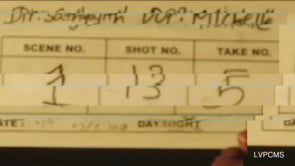
That’s the budget option. Video capture cards go for under 1,000₹, that’s $10. If you have 15,000₹, something like $150, you can splurge on a proper Blackmagic Capture Card, these are more reliable, AND they have both HDMI and SDI IN video inputs. And I’m all for supporting Blackmagic as a company, both their software and hardware are really amazing. But if you had their capture card, I’m not sure you’d get glitches like this in your footage, and these really take you back.
In any case, now you’re connected to the camera out and can view the footage on your computer. On Mac you can record it using OBS Studio using the Capture Card input. On Linux, OBS Studio should also work, but the capture card is also recognized as regular video input so you can record it using the regular camera app.
You can now record whatever the camera is showing. Of course not in the raw format, it's a relatively lo-res footage in Rec-709 colour space. Still, this is enough to put it in film editing software and check for continuity issues.
I've just been doing spot editing for our diploma project, and here's the catch. It does speed up the filming process significantly. The spot editor can point out issues with footage, epecially lighting and continuity, and is a massive bummer with some shots ("the hairstyle doesn't match, we need to redo this shot").
But in our case I will also be the editor of the film we've shot, and when editing, it is a priority for all editors to be able to shift the blame onto everyone involved in making the movie, especially the cinemats. But if the editor was actively on set, doing spot edit? No one to blame.
So yeah, don't do spot editing for films you're going to edit yourself.
Don't do it.
Unless your wife is the cinematographer and you wouldn't get to blame her anyways, then go ahead.
Overall, the movie turned out good (as far as I can see in the footage we've shot). 90% was shot on Arri cam in ARRIRAW, and as we all know it's the mathematically purest raw video format out there. Not my favourite, my favourite is BRAW, which mathematically speaking is not a raw video format, but which has its own software development kit (yay Blackmagic!). But still, I never worked with Arri footage extensively before, and I appreciate this opportunity a lot. It's a Malayalam short film and I had the opportunity to work with some amazing Malayalam actors; some clips will follow soon.
In other news, I've been recently diving deep into Shopify App Store data (retrieved through a custom scraper). It's interesting, in the last two weeks the app store has been releasing close to a hundred new apps a day, on some days over 200. Most popular category for new apps, analytics.
Majority of the apps, something like 19,583 out of 19,585, have under 10,000 reviews (actually only around 6,000 apps have any reviews, that's ca. 20% of all the apps published).
Unsurprisingly, the most reviewed app on the App Store is... A review app. Judge.me, with 38,000 reviews. Not only that, they still rake a share of around 200 new reviews per week, vast majority five-star. They definitely know their market.
Anyways, there's some interesting data here, and if there's an angle you'd like to hear more about, hit me up.